Manhattan Rent Hits $4,700 as Inventory Crashes for 24 Straight Months
Min 1
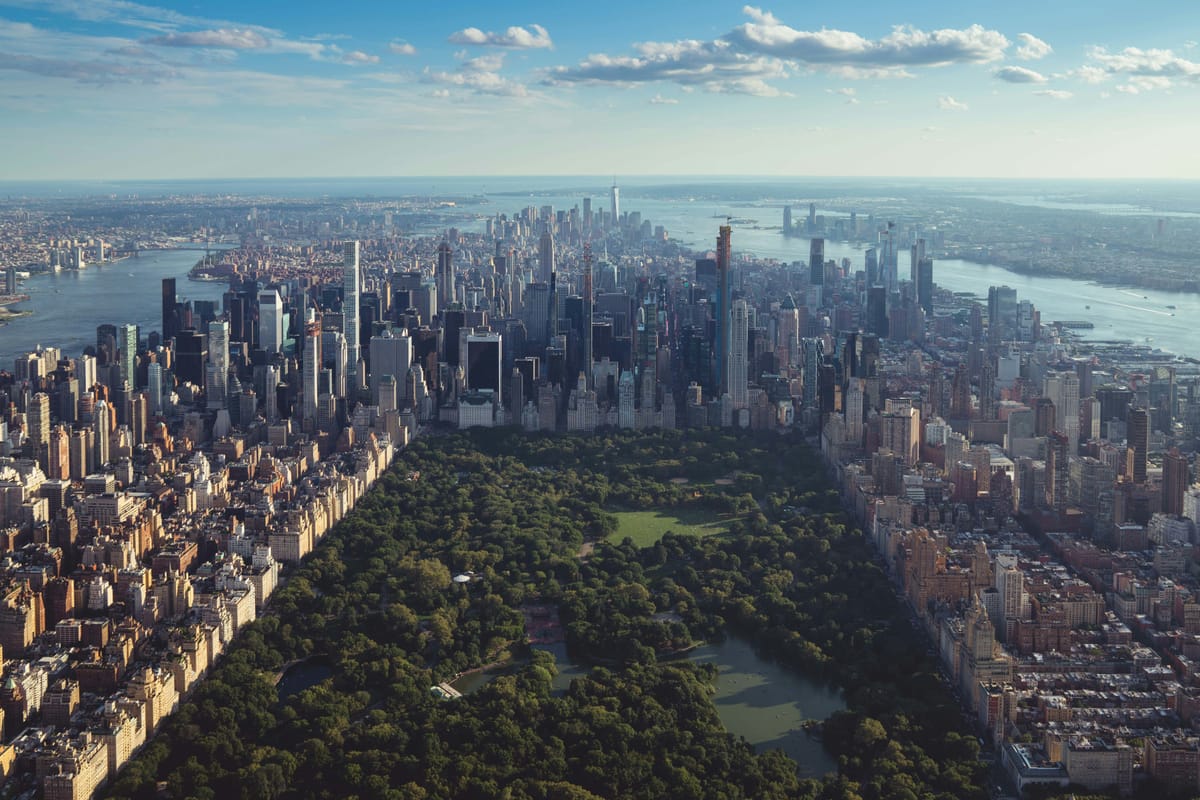
Something remarkable is happening in Manhattan that defies everything you're hearing about the national rental market.
Manhattan rental inventory fell for the 24th straight month in February 2026 — the longest run ever recorded for New York City's priciest borough. That's two full years of declining supply while the rest of the country is swimming in empty apartments.
The numbers tell a story that shouldn't be possible in 2026. Citywide rental inventory dropped 5.5% year-over-year to just under 26,000 units.
As a result, Manhattan's median asking rent soared 6.9% to $4,700 per month. Brooklyn jumped 7.2% and Queens climbed 5.0%. This is happening while the national median rent is falling 1.5% year-over-year and vacancy rates are hitting record highs nationwide at 7.4%.
Here's the kicker: amid a citywide rental construction boom that added nearly 19,000 new units in 2025, Manhattan saw only 2,575 new units — far behind Brooklyn's 11,167.
The supply that's supposed to be flooding the market? It's going everywhere except where people actually want to live.
Competition for rentals with two or more bedrooms is especially fierce, with inventory for larger units well below pre-pandemic levels.
This isn't just expensive units sitting empty while renters scramble for studios. This is families and professionals fighting over every available apartment regardless of size or price.
Min 2
The divergence between Manhattan and the rest of America creates one of the clearest arbitrage opportunities in real estate right now.
While investors panic about oversupply in Austin and Phoenix, Manhattan is experiencing the exact opposite problem — and almost nobody is positioned to capitalize on it.
New construction rental supply remains severely limited in Manhattan compared to Brooklyn and Queens. That gap isn't closing anytime soon.
Getting permits, dealing with community boards, navigating landmark restrictions, and managing union labor costs means Manhattan development moves at a glacial pace compared to throwing up garden-style apartments in Sunbelt suburbs.
The cash flow math in Manhattan looks completely different than the rest of the country. That $4,700 median rent translates to $56,400 annually per unit. Compare that to the national median of $1,367 per month or $16,404 annually.
You're getting 3.4 times the rent in Manhattan. Yes, your acquisition costs are higher. But when supply is constrained for 24 consecutive months and counting, you're not competing on price — you're competing on availability.
Here's the investor payoff most people miss: rent growth matters way more than starting rents when you're analyzing long-term returns. Manhattan rents are up 6.9% year-over-year. National rents are down 1.5%.
Over a 10-year hold, that 8.4 percentage point spread in annual growth compounds to massive differences in total return. A property generating $56,400 in annual rent at 6.9% annual growth hits $109,000 in year 10. The same starting rent at -1.5% annual growth drops to $48,000. That's the difference between building wealth and treading water.
Min 3
The structural forces driving Manhattan's rental shortage aren't going away — they're accelerating.
Units are taking longer to lease once they hit the market, but inventory keeps declining because demand is outpacing even the limited new supply. While most of the country saw over 600,000 new multifamily units delivered in 2024, Manhattan got just 2,575.
Compare what's happening in Manhattan versus the typical oversupplied market.
Austin saw rents drop 5.9% year-over-year as new supply flooded the market. Los Angeles, Seattle, and Fort Lauderdale are all projected to see modest rent increases around 3% in 2026 as they work through excess inventory.
Manhattan is blowing past all of them with 6.9% growth despite being the most expensive market in the country.
The median Manhattan rent of $4,700 per month means a tenant needs to earn roughly $188,000 annually to comfortably afford that apartment using the 30% income rule. That's more than three times the median U.S. household income of $59,384.
But here's what matters: New York has the density of high earners to support those rents. Wall Street bonuses, tech salaries, finance jobs, professional services — the concentration of six-figure incomes in Manhattan is unmatched anywhere in America.
Even with concessions on the rise — about 23.5% of rentals across the city offered at least one concession in late 2025, up from 18.5% the year before — the underlying fundamentals point to continued rent growth.
Those concessions are mostly showing up in new developments trying to fill units, not in the existing inventory where competition remains intense.
Min 4
The competitive advantage for investors who understand this market is enormous. While institutional money piles into Sunbelt multifamily that's already overbuilt, Manhattan remains surprisingly accessible for individual investors who know where to look.
The key is understanding that "Manhattan real estate" isn't one market — it's dozens of micro-markets with wildly different dynamics.
Luxury rentals are setting records. The median rent in doorman buildings hit $5,350 in late 2025. One-bedroom average rents reached all-time highs of $5,140. Three-bedrooms hit $12,407.
These aren't pandemic anomalies that will correct. These are supply-constrained markets where wealthy renters have limited alternatives and will pay premium prices for quality.
But the opportunity isn't just in luxury.
Queens saw its median asking rent jump 13.5% year-over-year to $2,950 as renters in search of affordability looked to the borough. Brooklyn neighborhoods like East New York saw rents jump 18% to that same $2,950 level.
These outer-borough markets are experiencing Manhattan-level rent growth at a fraction of Manhattan acquisition costs.
The mistake most investors make is thinking they need millions to play in New York. The reality is you can buy cash-flowing rental properties in Queens or Brooklyn for $500,000-$800,000 that are riding the same supply shortage wave as Manhattan.
Those properties are still within subway distance of Manhattan jobs, still benefiting from the city's high-income tenant pool, but trading at significant discounts to Manhattan per-square-foot prices.
Min 5
The timing on this opportunity won't last forever. Manhattan's 24-month inventory decline is already the longest streak on record. At some point, new supply will start hitting the market in meaningful volume.
But that "some point" is years away, not months. Construction cycles in New York run 3-5 years from permits to completion. Projects that break ground today won't deliver units until 2028 or 2029.
That gives investors a multi-year runway to acquire properties, capture rent growth, and build equity before any meaningful supply wave hits.
Even when new supply eventually arrives, it'll be concentrated in new development buildings with premium rents, not competing directly with the existing housing stock where most investors operate.
The average upfront cost to move into a NYC rental hit $10,454 in 2023 — including first month's rent, security deposit, broker fee, and application fees. Those high upfront costs keep vacancy levels low because renters can't afford to move frequently.
In 2022, just 21% of NYC renters had moved into their current apartment within the previous three years, down sharply from 30% in 2019. That stickiness creates predictable cash flow for landlords.
The return to office trend is another tailwind most investors are underestimating. Manhattan's finance, technology, and professional services sectors show stable employment.
As more companies mandate in-office work, demand for Manhattan-area rentals will only increase. These aren't remote workers who can live anywhere. These are high-income professionals who need to be within commuting distance of Midtown and Downtown offices.
Takeaway
The Manhattan rental market is moving in the exact opposite direction of the rest of America — and that divergence creates one of the clearest investment opportunities in real estate right now.
While everyone's focused on oversupply in Sunbelt markets, Manhattan just recorded its 24th consecutive month of declining inventory and 6.9% rent growth.
This isn't a short-term anomaly. This is a structural supply shortage driven by regulatory constraints, high construction costs, and limited available land.
The supply that would fix this shortage is years away from hitting the market. In the meantime, rents keep climbing because high-income tenants have nowhere else to go.
Here's what separates investors who build wealth from investors who watch others build wealth: understanding when a market is moving against the herd and having the conviction to act on it.
Right now, everyone's avoiding New York because it's expensive and complicated. That's exactly why the opportunity exists.
The smart move is targeting outer-borough properties in Queens and Brooklyn that benefit from Manhattan's supply shortage but trade at more reasonable entry prices.
Look for properties within a 30-minute subway commute to Midtown. Target neighborhoods with strong schools, low crime, and improving retail corridors. Focus on two- and three-bedroom units where competition is fiercest and supply is most constrained.
You don't need to buy a $3 million condo in Manhattan to capitalize on this trend. A $600,000 rental property in Astoria or Park Slope capturing 6-9% annual rent growth will generate better returns than a $600,000 property in Austin or Phoenix fighting through oversupply and flat or negative rent growth for the next 2-3 years.
The window to position ahead of this trend is right now — before the broader market wakes up to what's happening in New York.
Once institutional capital realizes Manhattan's supply shortage won't resolve quickly, acquisition prices will adjust to reflect the rent growth reality. By then, the best opportunities will be gone. Don't be the investor who understood the opportunity but waited too long to act.